Surprising Reasons Why Your Car Takes Longer to Warm Up
As temperatures begin dropping in Minnesota, you naturally expect your vehicle to need a little more time to warm up. But what if you notice that your car takes longer to warm up than it did last fall or winter?
Maybe the temperature gauge barely moves during your morning commute. Perhaps the heater takes much longer to produce warm air. You might even notice the engine temperature dropping again while you’re driving.
A change in warm-up time can be easy to dismiss as colder weather, but sometimes it points to a problem with the thermostat, coolant level, temperature sensor, or another part of the cooling system. Your engine is designed to reach and maintain a specific operating temperature, even when it’s cold outside.
Understanding what has changed can help you determine whether your vehicle is simply responding to cooler weather or needs to be inspected.
Why Does a Car Need to Warm Up?
Your engine is designed to operate within a particular temperature range. When you first start the vehicle after it has been sitting, especially overnight, the engine and its fluids are cold.
As the engine runs, combustion produces heat. The cooling system regulates that heat so the engine can reach its normal operating temperature without becoming too hot.
The thermostat plays an especially important role during this process. When the engine is cold, the thermostat restricts coolant circulation through the radiator. This helps the engine reach operating temperature more quickly. Once the appropriate temperature is reached, the thermostat opens to allow coolant to circulate through the radiator and prevent overheating.
So while we normally think of the cooling system as something that keeps an engine from getting too hot, it also helps regulate how quickly the engine warms up and keeps its temperature stable.
Why Does My Car Take Longer to Warm Up When It’s Cold?
Some increase in warm-up time is completely normal as outdoor temperatures fall.
When the air, engine, coolant, and other components are colder to begin with, the engine has more work to do before reaching operating temperature. Turning on the cabin heater can also remove some heat from the cooling system because the heater uses hot coolant to warm the air entering the passenger compartment.
The important thing is recognizing what is normal for your particular vehicle.
If your car has always warmed up within roughly the same amount of driving time and suddenly takes considerably longer, the weather may not be the only explanation.
A Stuck-Open Thermostat Is a Common Cause
If your car takes longer to warm up than it used to, one of the first components worth investigating is the thermostat.
A thermostat can fail in different ways. When it becomes stuck closed, coolant circulation may be restricted and the engine can overheat. When it becomes stuck open, coolant may circulate through the radiator before the engine has reached its intended operating temperature.
That means heat is constantly being removed from an engine that is still trying to warm up.
You may notice:
- The temperature gauge rises very slowly
- The gauge stays lower than its usual position
- Cabin heat takes longer to become warm
- Heat from the vents isn’t as hot as it used to be
- Engine temperature falls while driving at highway speeds
- Fuel economy changes
A thermostat problem can become much more noticeable once fall temperatures arrive.
Low Coolant Can Affect Warm-Up and Cabin Heat
Low coolant is another reason your car takes longer to warm up or seems to have inconsistent heating.
Coolant absorbs heat from the engine and carries it through the cooling system. Hot coolant also flows through the heater core, allowing your climate control system to produce warm air.
If the coolant level becomes too low, you may experience inconsistent engine temperatures or poor heater performance.
Low coolant should also raise another question: Where did the coolant go?
Your vehicle’s cooling system is designed to be closed. A low coolant level may indicate a leak somewhere in the system.
Possible leak locations include:
- Radiator hoses
- Radiator
- Water pump
- Coolant reservoir
- Thermostat housing
- Heater core
- Gaskets or seals
Simply adding coolant without determining why the level dropped may temporarily hide a larger problem.
Could the Temperature Sensor Be Wrong?
Sometimes the engine is warming normally, but the information you’re seeing isn’t accurate.
Modern vehicles use coolant temperature sensors to monitor engine temperature. That information may be used by the engine computer and displayed through the dashboard temperature gauge.
If a sensor develops a problem, the gauge may behave differently even though the actual engine temperature is normal.
Sensor problems can sometimes cause other symptoms as well because engine temperature information may be used to help manage fuel delivery, emissions controls, cooling fan operation, and other systems.
This is why diagnosing a slow warm-up should involve more than automatically replacing the thermostat.
Why Isn’t My Heater Getting Warm?
Drivers often first notice a warm-up problem because the cabin heater isn’t working like it used to.
Your vehicle’s heater depends on heat generated by the engine. Hot coolant passes through a small heat exchanger called the heater core. Air moving across the heater core becomes warm before entering the passenger compartment.
If your engine isn’t reaching the proper operating temperature, there may not be enough heat available for strong cabin heating.
However, poor heat can also be caused by other problems, including:
- Low coolant
- Air trapped in the cooling system
- Heater core restrictions
- HVAC blend door problems
- Coolant circulation problems
- Climate control system faults
If your car takes longer to warm up and the heater has also become noticeably weaker, the two symptoms may be connected.
What If the Temperature Drops While I’m Driving?
This is an especially useful clue.
Imagine that your vehicle finally reaches a normal temperature while you’re driving around town. You get onto the highway, and after several minutes you notice the temperature gauge beginning to fall.
Increased airflow through the radiator at highway speeds removes heat very effectively. Normally, the thermostat regulates coolant flow to help the engine maintain its proper operating temperature.
If coolant is circulating through the radiator continuously because the thermostat isn’t controlling the flow correctly, the engine may run cooler than intended.
A temperature gauge that rises at idle or in city driving but drops significantly during highway driving deserves an inspection.
Is a Slow-Warming Engine Actually a Problem?
It can be tempting to think that running cooler is better than running too hot.
But engines are engineered to operate within a specific temperature range. An engine that consistently runs too cool isn’t necessarily operating as intended.
Engine temperature can influence:
- Fuel management
- Engine efficiency
- Emissions
- Oil performance
- Cabin heating
- Defroster performance
If your car takes longer to warm up because of a mechanical problem, correcting it isn’t simply about getting warm air from the vents faster. It’s about allowing the engine to operate under the conditions it was designed for.
Should I Let My Car Idle Longer to Warm It Up?
When colder mornings arrive, many drivers assume the solution is simply letting the vehicle idle in the driveway for a long time.
For most modern vehicles, extended idling isn’t necessary just to bring the engine to operating temperature. After allowing the engine a brief period to stabilize, normal gentle driving generally warms the engine more effectively than prolonged idling.
Of course, you may need additional time to clear frost, ice, or fog from the windows before driving safely.
If your car takes longer to warm up because something is wrong with the cooling system, however, adding more idle time isn’t fixing the underlying problem.
Pay Attention to the Temperature Gauge
Your dashboard can give you useful information long before a problem becomes severe.
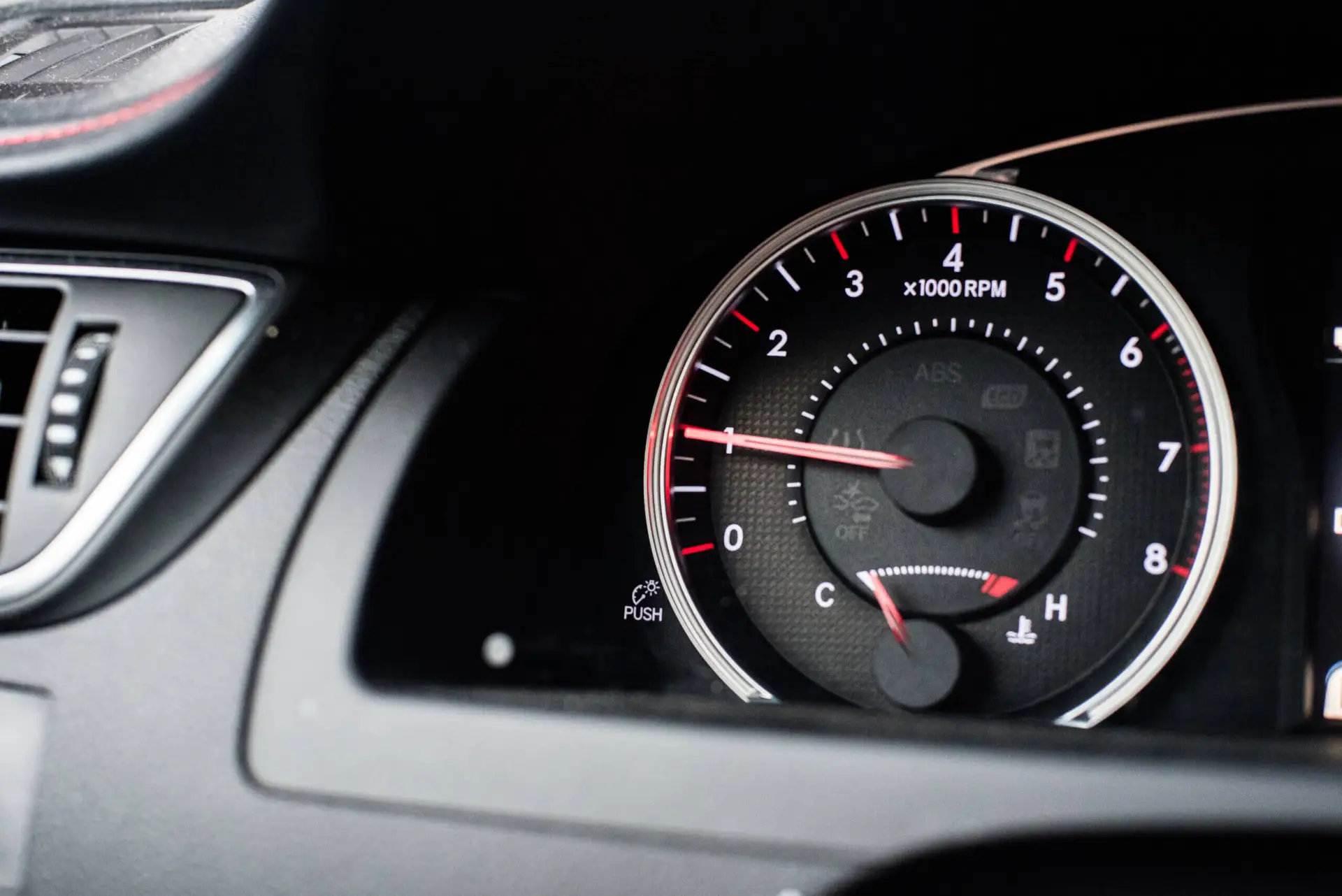
Become familiar with where your temperature gauge normally sits after the engine is fully warmed.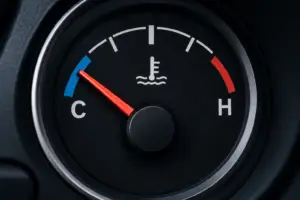
Then watch for changes such as:
- Taking significantly longer to reach the normal position
- Remaining unusually low
- Moving up and down while driving
- Dropping noticeably at highway speeds
- Rising higher than normal
- Never reaching its usual position
Not every vehicle uses a traditional temperature gauge, but some vehicles provide digital temperature information or warning indicators instead.
Cooler Fall Weather Can Reveal Existing Problems
A thermostat or cooling system problem may have been developing throughout the summer without attracting much attention.
When outdoor temperatures are warm, an engine that runs slightly cooler than intended may not be obvious. Your cabin heater probably isn’t being used either, eliminating another clue.
Then September and October arrive.
Morning temperatures fall, you turn the heater on for the first time in months, and suddenly you realize something has changed.
That’s one reason fall is a good time to pay attention to how quickly your vehicle reaches normal operating temperature.
What Will a Technician Check?
If your car takes longer to warm up, a technician can evaluate the cooling and temperature-control systems rather than guessing at the cause.
Depending on the symptoms, an inspection may include:
- Checking coolant level and condition
- Inspecting for coolant leaks
- Evaluating thermostat operation
- Comparing actual engine temperature with sensor readings
- Inspecting cooling system hoses
- Checking heater performance
- Looking for stored diagnostic trouble codes
- Evaluating coolant circulation
- Inspecting the radiator and related components
Providing details about exactly what you’ve noticed can also help.
Tell your technician whether the problem occurs only on very cold mornings, whether the heater is affected, where the temperature gauge normally sits, and whether the temperature changes while driving at different speeds.
Don’t Wait Until Winter to Investigate It
A slightly longer warm-up time may not seem important during a cool September morning.
But Minnesota temperatures aren’t going to stay mild.
A cooling system or thermostat issue that’s merely inconvenient during early fall can become much more noticeable once temperatures drop significantly. Weak cabin heat and poor defroster performance can also become much bigger concerns during winter.
Addressing unusual behavior now gives you an opportunity to have the vehicle inspected before truly cold weather arrives.
Conclusion
If your car takes longer to warm up than it used to, don’t automatically assume colder weather is the only reason.
A small increase in warm-up time is normal as outdoor temperatures fall, but a significant change can point to a stuck-open thermostat, low coolant, a coolant leak, temperature sensor problems, or another cooling system issue. You may also notice weak cabin heat, unusual temperature gauge behavior, or an engine temperature that drops while driving.
Your vehicle should be able to reach and maintain its intended operating temperature throughout the year. If your car takes longer to warm up or you’ve noticed that the heater isn’t performing like it used to, contact us here to schedule an inspection with Dale Feste Automotive. Finding the cause now can help make sure your vehicle is ready before Minnesota’s colder weather arrives.
Further Reading
National Highway Traffic Safety Administration – Winter Driving Tips and Cooling System Maintenance
https://www.nhtsa.gov/winter-driving-tips
AAA – Warming Up Your Car
https://www.stage.minneapolis.aaa.com/magazine/automotive/warming-your-car
AAA – Car Overheating: Causes and Cooling System Information
https://ww2.aaa.com/autorepair/articles/car-overheating-8-causes-and-solutions
Gates – Automotive Thermostats and Engine Temperature Control
https://www.gates.com/us/en/other-products/caps-and-thermostats/thermostats.html
National Highway Traffic Safety Administration – Summer Driving and Cooling System Tips
https://www.nhtsa.gov/summer-driving-tips