Car Smells Like Burning Rubber? 7 Warning Signs You Shouldn’t Ignore
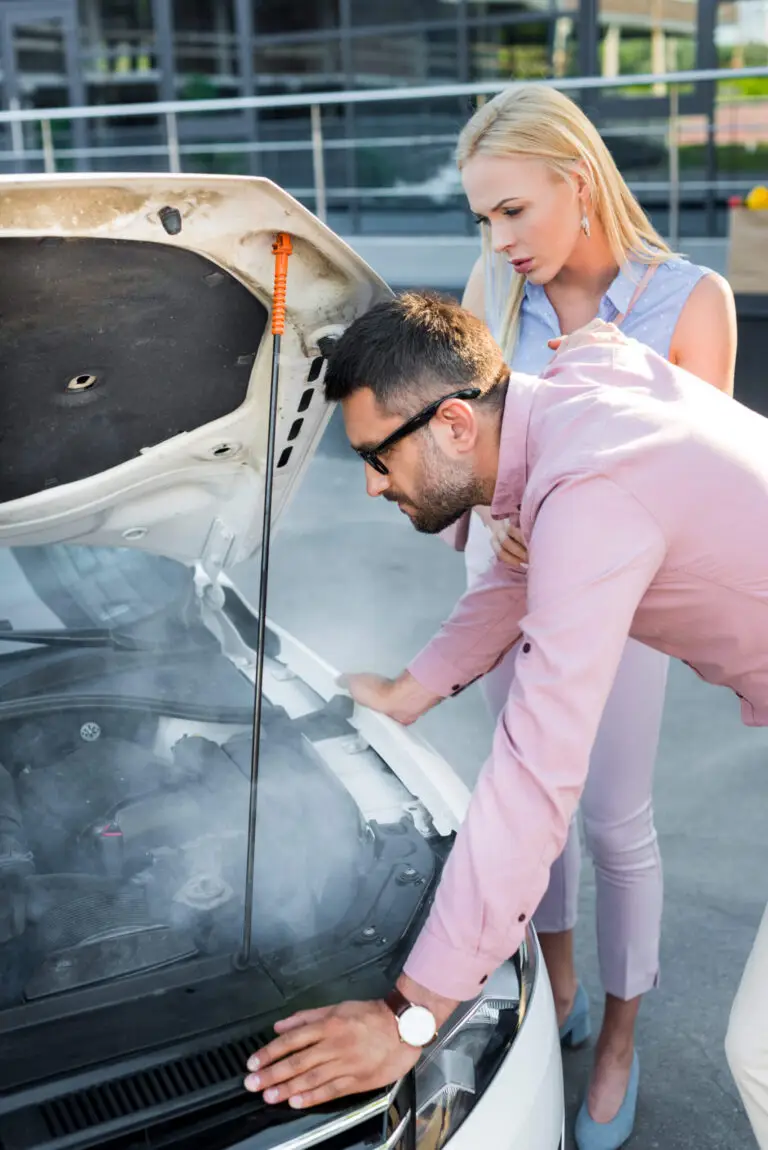
An unusual smell coming from your vehicle is never something you want to ignore, especially when it resembles burning rubber. Whether you notice the odor while driving, after parking, or when starting your engine, it can leave you wondering if something is overheating or beginning to fail.
If your car smells like burning rubber, several different components could be responsible. Sometimes the cause is relatively simple, such as a slipping belt or debris caught near a hot exhaust component. Other times, the smell may indicate a more serious mechanical problem that requires immediate attention.
As temperatures begin dropping across Minnesota, changes in vehicle operation can make certain problems more noticeable. However, a burning rubber smell isn’t necessarily related to cold weather. It can occur at any time of year.
Understanding the possible causes and recognizing accompanying symptoms can help you determine when your vehicle needs professional attention.
Why Does My Car Smell Like Burning Rubber?
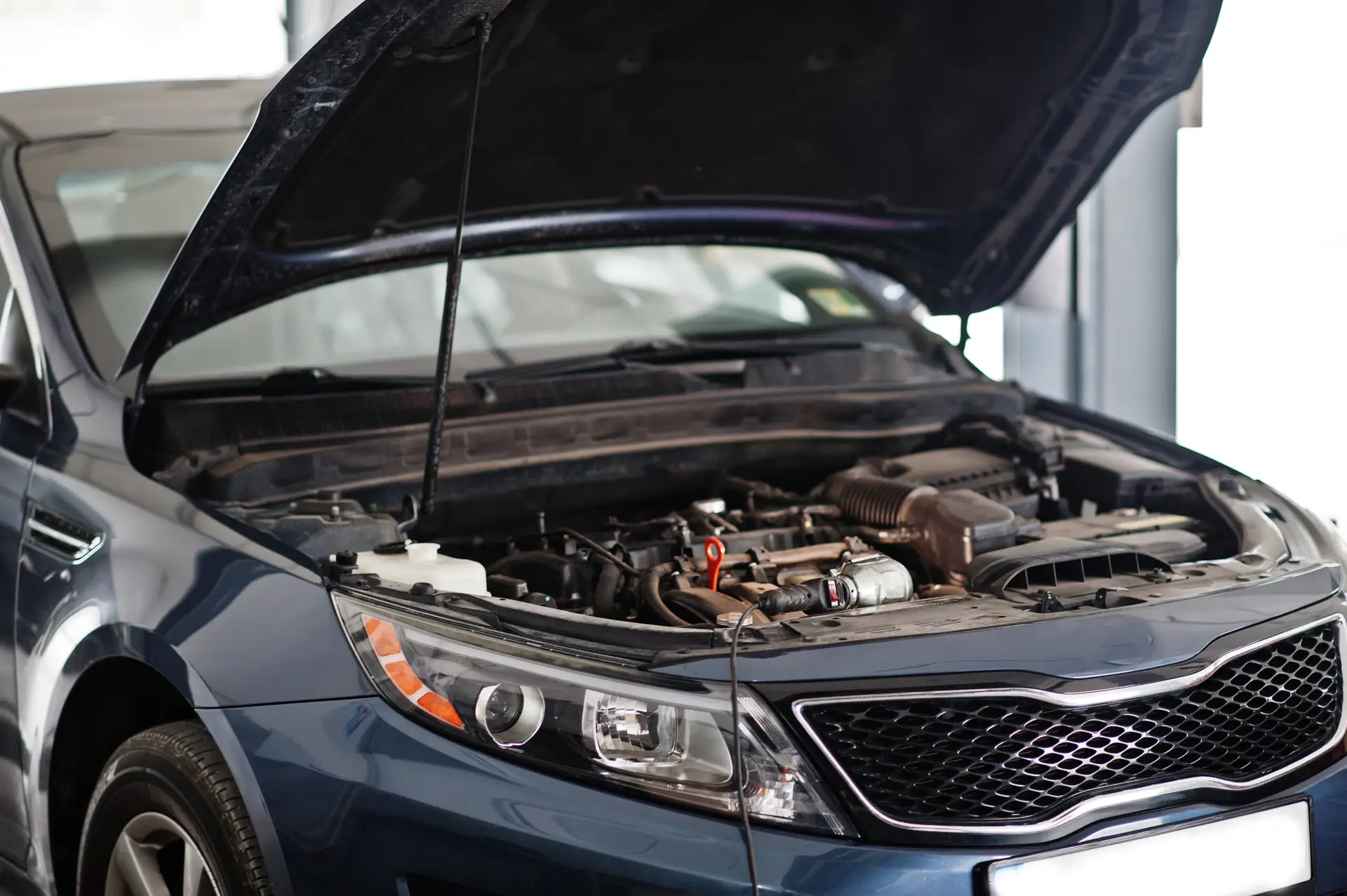
Vehicles contain numerous rubber components, including belts, hoses, seals, and protective coverings. Many of these parts operate near engines, exhaust systems, and other components that generate significant heat.
When rubber comes into contact with excessive heat or experiences abnormal friction, it can produce a distinctive burning odor.
However, not every smell resembling burning rubber actually comes from rubber. Overheated brakes, leaking fluids, electrical components, and other mechanical problems can create similar odors.
If your car smells like burning rubber, identifying when the smell occurs is one of the most useful steps toward determining its source.
1. A Slipping or Worn Serpentine Belt
One possible reason your car smells like burning rubber is a problem with the serpentine belt.
The serpentine belt drives several engine accessories, depending on the vehicle. These may include the alternator, air conditioning compressor, and power steering pump on vehicles with hydraulic power steering.
The belt relies on proper tension and contact with its pulleys to operate correctly.
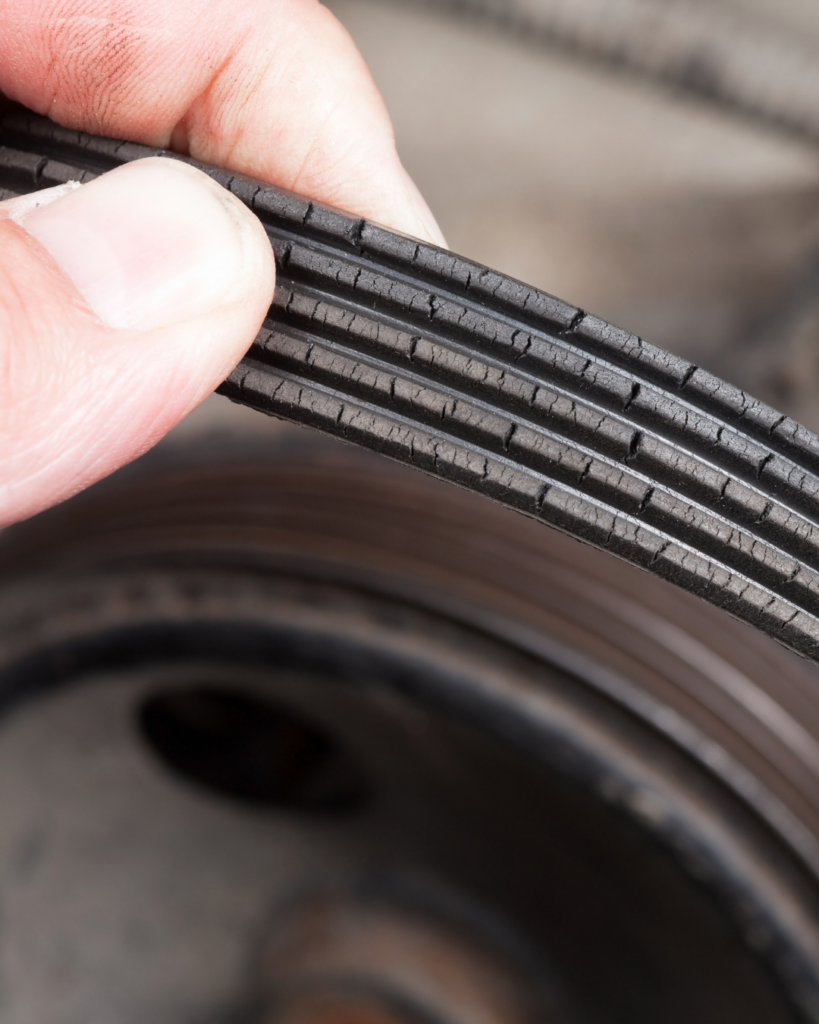
When a belt becomes worn, loose, contaminated, or improperly tensioned, it may slip against a pulley. The resulting friction can generate heat and produce a burning rubber smell.
Common warning signs include:
- Squealing or chirping noises when starting the engine
- Unusual sounds when accelerating
- Visible cracks or fraying on the belt
- Intermittent charging system warnings
- Changes in accessory performance
A seized pulley or failing belt tensioner can also contribute to belt slipping and overheating.
Ignoring these symptoms could eventually lead to belt failure, leaving important engine accessories unable to operate.
2. Rubber Hoses Touching Hot Engine Components
Your engine compartment contains multiple rubber hoses that carry coolant, air, and other fluids.
These hoses are designed to withstand normal operating temperatures, but they are not intended to rest against extremely hot components such as the exhaust manifold.
Over time, mounting clips and brackets can loosen, allowing a hose to shift out of its intended position.
If a rubber hose touches a hot engine or exhaust component, the outer material may begin to deteriorate and produce a burning smell.
In some situations, you might also notice:
- Visible discoloration on a hose
- Cracking or blistering rubber
- Fluid leaks
- Steam from the engine compartment
- Changes in engine temperature
A damaged coolant hose can become particularly concerning because a significant coolant leak may lead to engine overheating.
If you notice smoke, steam, or an increasing temperature reading along with the odor, stop driving as soon as it is safe to do so and have the vehicle evaluated.
3. Overheated Brakes or a Sticking Brake Caliper
Although brakes do not normally smell exactly like rubber, overheated brake components can produce a sharp, unpleasant odor that drivers sometimes describe as burning rubber.
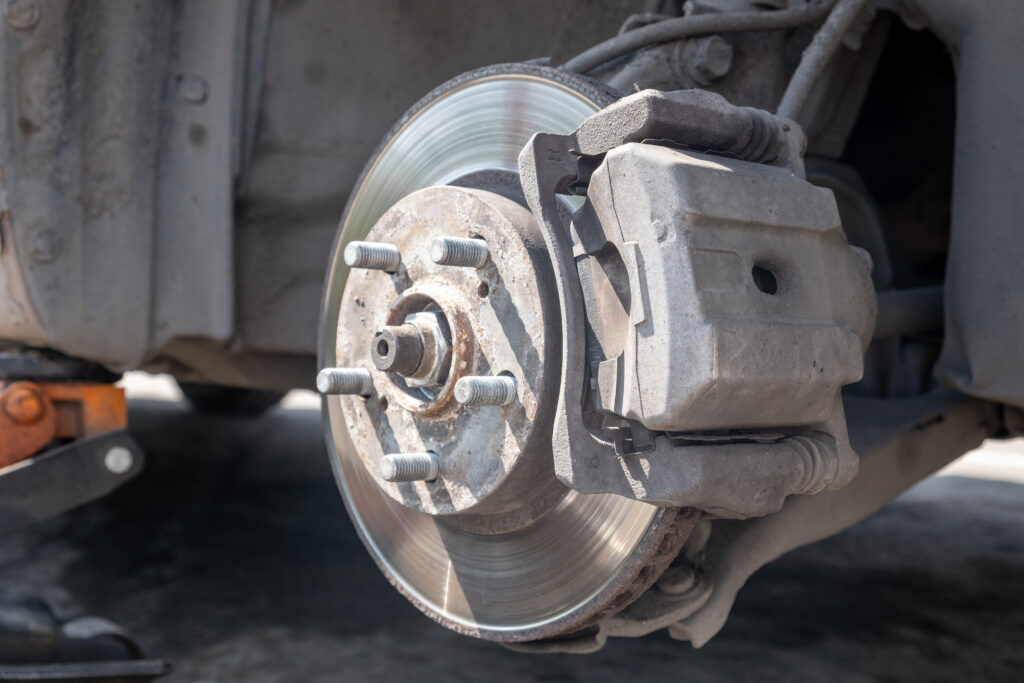
Your braking system generates heat through friction whenever you slow down or stop.
Under normal conditions, the system is designed to handle this heat. However, problems can develop when brake components fail to release properly.
A sticking brake caliper, seized slide pin, or parking brake that does not fully disengage can cause brake pads to remain in contact with the rotor.
This creates excessive friction and heat, even when you are not pressing the brake pedal.
Signs of an overheating brake may include:
- A burning smell near one wheel
- The vehicle pulling to one side
- Reduced fuel efficiency
- Unusual grinding or squealing noises
- Excessive brake dust
- Smoke near a wheel
You may notice the smell more strongly after driving through town or stopping in a parking lot.
Overheated brakes can affect braking performance and damage nearby components. If you suspect a dragging brake, avoid continued driving and arrange an inspection.
4. Engine Oil Leaking Onto Hot Surfaces
Not every burning rubber smell comes from a rubber component.
Engine oil leaking onto a hot exhaust manifold or another heated surface can create a strong burning odor that is sometimes mistaken for rubber.
Oil leaks can develop from aging gaskets, seals, and other components. A valve cover gasket leak, for example, may allow oil to escape near the upper portion of the engine.
When the engine reaches operating temperature, leaking oil can begin to smoke or produce a noticeable smell.
You might notice the odor most strongly after parking because heat remains trapped beneath the hood even after the engine is turned off.
Other possible symptoms include:
- Oil spots beneath the vehicle
- A gradually decreasing engine oil level
- Smoke coming from the engine compartment
- Oil residue around engine components
- A burning smell after longer drives
An oil leak should be inspected before it leads to additional problems. Oil dripping onto hot exhaust components can also present a fire hazard.
5. Electrical Wiring or Insulation Overheating
Electrical problems are another possible explanation when your car smells like burning rubber.
Automotive wiring is protected by insulating materials designed to prevent electrical contact and protect the wires from their surroundings.
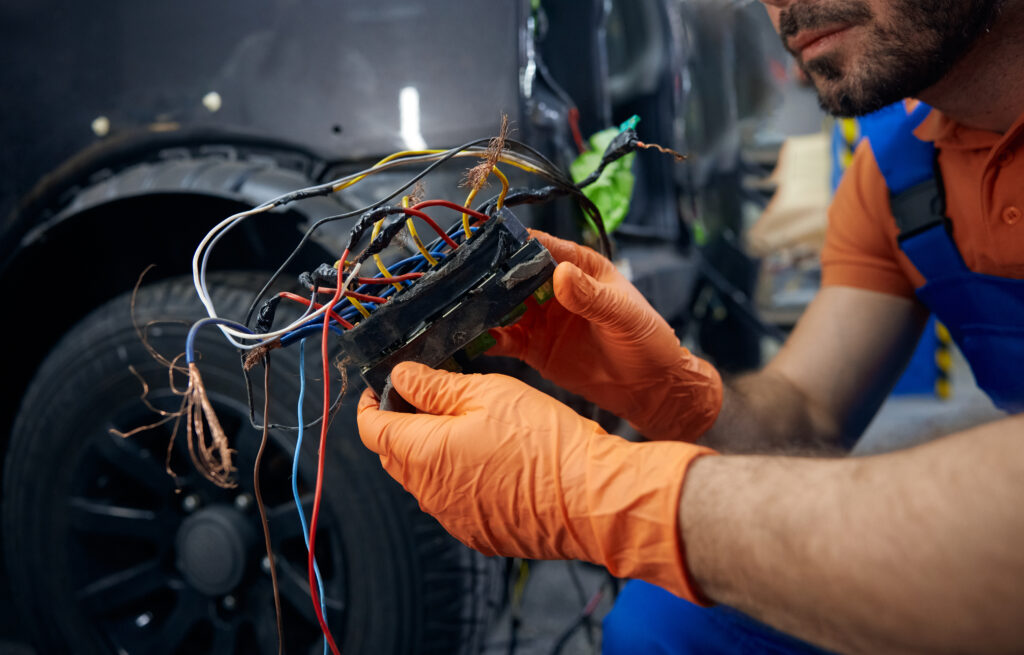
However, damaged wiring, loose electrical connections, excessive electrical resistance, or short circuits can generate enough heat to damage insulation.
The resulting odor may resemble burning rubber or melting plastic.
Electrical problems may also cause:
- Flickering dashboard lights
- Malfunctioning electrical accessories
- Repeatedly blown fuses
- Intermittent electrical failures
- Smoke or a sharp burning smell
Unlike some mechanical odors, an electrical burning smell can indicate an immediate fire risk.
If you notice a strong electrical smell or smoke, safely stop the vehicle, turn off the engine, and arrange professional assistance. Do not continue driving in hopes that the smell will disappear.
6. A Slipping Clutch in a Manual Transmission
For vehicles equipped with manual transmissions, a slipping clutch can produce an odor that drivers sometimes describe as burning rubber.
The clutch connects and disconnects engine power from the transmission. It uses friction to transfer power, and excessive slipping creates heat.
Some heat generation is normal during clutch engagement, but prolonged slipping can overheat the friction material.
This may happen when a clutch is worn or when it is held partially engaged for extended periods.
Common signs include:
- Engine RPM increasing without a corresponding increase in vehicle speed
- Difficulty accelerating normally
- A burning smell after climbing hills
- Unusual clutch pedal behavior
- Difficulty engaging gears
Driving habits can contribute to clutch overheating, but a persistent smell may indicate worn components or another mechanical issue.
A slipping clutch generally becomes worse over time and should be evaluated before the vehicle loses its ability to transfer power effectively.
7. Plastic or Road Debris Stuck Near the Exhaust
Sometimes the source of a burning smell isn’t a failing vehicle component at all.
Plastic bags, road debris, and other materials can become trapped underneath a vehicle and contact the hot exhaust system.
Exhaust pipes and catalytic converters operate at high temperatures. When plastic or rubber debris touches these surfaces, it can melt and produce a strong burning odor.
This can happen unexpectedly, especially after driving over debris that was difficult to see on the road.
You may notice the smell immediately after driving or when the vehicle is parked.
In some cases, the odor gradually disappears as the material burns away. However, that doesn’t mean you should assume the situation is harmless.
Debris trapped against a hot exhaust component can present a fire risk, and removing it may require access to the underside of the vehicle.
If the smell persists, have the vehicle inspected rather than reaching underneath or touching hot components yourself.
Why Does My Car Smell Like Burning Rubber After Driving?
The timing of the smell can provide useful information about what may be happening.
For example, a smell that develops after a long drive may be related to components that become hotter as the vehicle operates.
A smell that appears during braking could indicate excessive brake friction.
An odor that becomes noticeable when the engine starts may suggest a belt or pulley problem.
If the smell is strongest after parking, leaking fluids or materials contacting hot exhaust components may be responsible.
Pay attention to whether the smell occurs:
- Immediately after starting the engine
- While accelerating
- When braking
- After driving at highway speeds
- When the heater or air conditioning is running
- After parking and shutting off the engine
These details can help a technician narrow down the possible causes.
Is It Safe to Drive When Your Car Smells Like Burning Rubber?
Whether a vehicle is safe to drive depends on what is causing the smell, and that isn’t always something you can determine without an inspection.
A faint odor caused by a recently installed component may be different from a strong smell accompanied by smoke, warning lights, or unusual vehicle behavior.
However, a new or recurring burning smell should never be dismissed.
If your car smells like burning rubber and you also notice smoke, engine overheating, reduced braking performance, or electrical problems, pull over as soon as it is safe.
Turn off the engine and arrange assistance rather than continuing to drive.
If there are signs of an actual vehicle fire, get everyone out, move a safe distance away, and call emergency services. Do not open the hood if you suspect a fire underneath it.
Even when the vehicle seems to operate normally, a persistent burning smell warrants prompt attention.
How Will a Technician Find the Source?
Because several different problems can create similar odors, identifying the cause requires more than relying on the smell alone.
A technician may begin by discussing when the odor occurs and whether you’ve noticed any additional symptoms.
Depending on the circumstances, an inspection may include examining:
- Serpentine belts and pulleys
- Rubber hoses and their mounting positions
- Engine oil leaks
- Brake calipers and related components
- Electrical wiring and connectors
- Exhaust components
- Clutch operation on manual transmission vehicles
The goal is to identify the source of excessive heat, friction, leaking fluid, or damaged material.
A proper diagnosis helps prevent unnecessary repairs and ensures the underlying problem is addressed rather than simply masking the smell.
Can Regular Maintenance Prevent Burning Smells?
Not every mechanical failure can be predicted, but routine maintenance can help identify developing problems before they become more serious.
Belts and hoses naturally deteriorate with age, heat exposure, and regular use. Inspections can reveal cracking, fraying, loose connections, or other signs of wear.
Fluid leaks may also become visible before they produce noticeable odors.
Brake inspections can identify sticking components or abnormal wear, while general vehicle inspections can uncover damaged wiring or loose protective components.
If your car smells like burning rubber, having the problem evaluated early may help prevent additional damage and unexpected breakdowns.
Conclusion
If your car smells like burning rubber, the cause could range from a slipping serpentine belt or damaged hose to overheated brakes, an oil leak, electrical problems, a slipping clutch, or debris caught near the exhaust.
Because several of these problems can produce similar odors, it’s important not to assume that the smell is harmless simply because the vehicle still seems to drive normally.
Pay attention to when the smell occurs, whether it becomes stronger, and whether you notice other symptoms such as smoke, unusual noises, warning lights, or changes in vehicle performance.
At Dale Feste Automotive in Hopkins, Minnesota, our team can help identify the source of unusual vehicle odors and determine what repairs may be necessary. If your car smells like burning rubber or you’ve noticed another unfamiliar smell while driving, contact us here with any questions regarding your vehicle. Or you can schedule an appointment online here. Addressing the cause early can help protect your vehicle and keep you driving with confidence.
Further Reading
- AAA: Why Does My Car Smell Like Burning Rubber?
- Firestone Complete Auto Care: Why Does My Car Smell Like Burning?
- Firestone Complete Auto Care: Why Is There a Burning Smell From My Brakes?
- CarParts.com: Possible Reasons Why You Smell Burning Rubber in Your Car
- U.S. Fire Administration: Vehicle Fire Safety