Unlock the Mystery: Why Is My Car Clicking When I Turn?
Hearing an unusual noise while driving is never something you should ignore, especially when it happens every time you turn the steering wheel. If you’ve noticed your car clicking when I turn, you’re not alone. This is one of the more common symptoms drivers experience, and while it may seem like a minor annoyance at first, it can point to several mechanical issues that should be inspected before they become more serious.
Whether the clicking happens only during sharp turns, while backing out of a parking space, or anytime you steer left or right, understanding what causes a car clicking when I turn can help you catch problems early and avoid more expensive repairs.
Why Is My Car Clicking When I Turn?
Several components work together every time you steer your vehicle. These include the steering system, suspension, drivetrain, and wheels. As these parts wear over time, they can begin making clicking or popping noises when they are placed under stress during a turn.
The exact cause depends on where the sound is coming from, how often it occurs, and what other symptoms accompany it.
Let’s look at the most common reasons for a car clicking when I turn.
Worn CV Joints
One of the most common causes of a car clicking when I turn is a worn constant velocity, or CV, joint.
CV joints transfer power from the transmission to the wheels while allowing the suspension and steering to move freely. These joints are protected by rubber boots filled with grease. If a boot tears, dirt and moisture can enter while grease escapes, causing the joint to wear prematurely.
Signs of a worn CV joint include:
- Clicking during sharp turns
- Noise that gets louder while accelerating through a turn
- Torn or leaking CV boots
- Grease splattered around the inside of the wheel
Ignoring a damaged CV joint can eventually lead to complete joint failure, leaving your vehicle unable to move.
Loose or Damaged Suspension Components
Your suspension absorbs bumps and keeps your tires in contact with the road. Worn suspension parts can develop play that produces clicking noises during turns.
Potential suspension issues include:
- Worn ball joints
- Loose sway bar links
- Damaged control arm bushings
- Worn tie rod ends
These components not only affect ride quality but also impact steering precision and tire wear.
Steering System Problems
 If your steering system develops excessive wear, you may notice clicking, popping, or knocking while turning the wheel.
Common steering-related causes include:
- Worn steering rack components
- Loose steering linkage
- Damaged steering shaft joints
You may also notice:
- Loose steering feel
- Vehicle wandering
- Difficulty keeping the vehicle straight
- Increased steering effort
Because steering directly affects vehicle control, any unusual noises should be inspected promptly.
Failing Wheel Bearings
Wheel bearings allow the wheels to rotate smoothly with minimal friction.
Although failing wheel bearings often produce a humming or growling noise, severe wear can sometimes create clicking sounds, particularly while turning when additional pressure is placed on the bearing.
Other symptoms include:
- Vibration while driving
- Uneven tire wear
- Grinding noises
- Steering wheel vibration
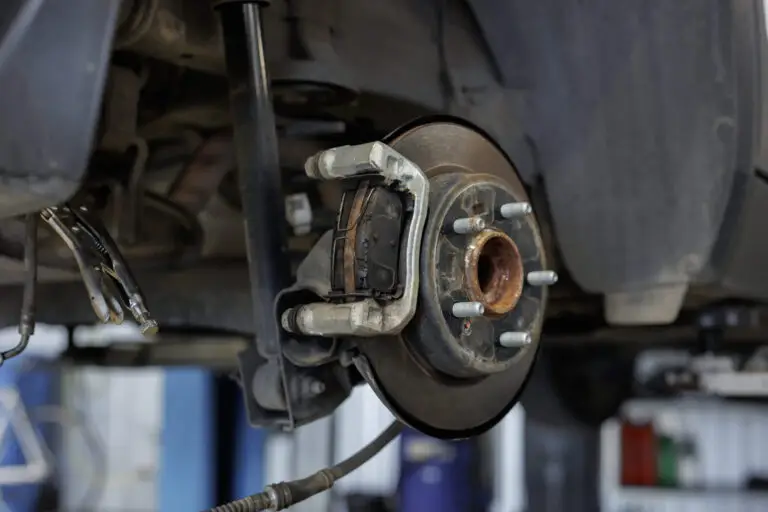
Brake Components Moving
Sometimes the clicking isn’t coming from the steering or suspension at all.
Loose brake hardware, worn brake pads, or improperly installed brake components can shift slightly when the direction of wheel rotation changes during a turn.
If the clicking only occurs at low speeds or immediately after applying the brakes, your braking system should also be inspected.
Loose Lug Nuts
 Although less common, loose lug nuts can also create clicking or knocking sounds while turning.
This is one of the more serious possibilities because loose wheels present a significant safety hazard.
If you’ve recently had your tires removed or rotated and hear a clicking noise afterward, have the lug nuts checked immediately.
Rocks or Debris
Sometimes the solution is surprisingly simple.
A small rock caught between the brake rotor and backing plate can produce a rhythmic clicking sound that changes during turns.
Similarly, debris lodged in the tire tread can create a clicking sound every wheel rotation.
While these issues are usually harmless, it’s still worth having your vehicle inspected if the sound persists.
Does the Clicking Only Happen During Sharp Turns?
The type of turn can provide valuable clues.
If your car clicking when I turn only happens during sharp turns, especially while accelerating, a worn CV joint becomes much more likely.
If the clicking occurs regardless of turn angle, steering or suspension components may be responsible.
Providing this information to your technician helps speed up the diagnostic process.
Other Symptoms to Watch For
A clicking noise rarely appears by itself.
You may also notice:
- Vibration in the steering wheel
- Clunking over bumps
- Vehicle pulling while driving
- Uneven tire wear
- Grease around the wheels
- Loose steering
- Popping noises
- Squeaking during turns
These additional symptoms help narrow down the source of the problem.
Can I Continue Driving?
Whether it’s safe to continue driving depends entirely on the cause.
Minor debris may not present any immediate danger.
However, worn steering components, damaged suspension parts, loose wheels, or failing CV joints can eventually affect your ability to control the vehicle safely.
If the clicking becomes louder, more frequent, or is accompanied by steering changes or vibration, schedule an inspection as soon as possible.
How Technicians Diagnose Clicking Noises
Finding the source of a clicking noise requires more than simply listening to the vehicle.
A professional inspection often includes:
- Road testing the vehicle
- Checking steering components
- Inspecting suspension parts
- Examining CV boots and axle shafts
- Inspecting brake hardware
- Checking wheel bearings
- Verifying lug nut torque
- Looking for damaged or loose components
Because several different systems can create similar sounds, a complete inspection helps identify the true cause.
Preventing Steering and Suspension Problems
While some wear is inevitable, regular maintenance helps catch issues before they become major repairs.
Helpful preventative maintenance includes:
- Regular tire rotations
- Routine suspension inspections
- Steering system inspections
- Wheel alignments
- Checking CV boots during oil changes
- Inspecting tires for uneven wear
- Addressing unusual noises promptly
Small repairs today often prevent larger repairs tomorrow.
Why Early Repairs Save Money
Many drivers continue driving because the clicking seems minor.
Unfortunately, a torn CV boot that could have been replaced early may eventually require an entire axle assembly.
Similarly, worn suspension parts can accelerate tire wear, affect wheel alignment, and place additional stress on nearby components.
Addressing the problem early typically reduces repair costs and helps avoid breakdowns.
Don’t Ignore Changes in Steering Feel
If your car clicking when I turn is accompanied by changes in steering feel, the issue deserves immediate attention.
Watch for:
- Steering that feels loose
- Increased effort while turning
- Vehicle drifting
- Steering wheel vibration
- Clunking sounds
- Unusual tire wear
These symptoms often indicate wear that extends beyond a simple clicking noise.
Conclusion
If you’ve noticed your car clicking when I turn, don’t assume the sound will simply go away. Clicking during turns can be caused by worn CV joints, suspension components, steering parts, wheel bearings, brake hardware, or even loose lug nuts. While some causes are relatively minor, others can affect your vehicle’s handling and safety if left unaddressed.
Having the problem diagnosed early can help prevent additional damage, reduce repair costs, and give you confidence every time you get behind the wheel. If you’ve started hearing a clicking noise while turning, contact us here to schedule an inspection. Our experienced technicians can identify the source of the noise and recommend the right repair to keep your vehicle driving safely.
Further Reading
- Car Care Council: Steering and Suspension Maintenance
https://www.carcare.org - NHTSA: Vehicle Maintenance and Safety
https://www.nhtsa.gov/vehicle-safety - AAA: Vehicle Maintenance Tips
https://www.aaa.com - ASE: Car Care Tips
https://www.ase.com/car-care-tips - MOOG: Steering and Suspension Education
https://www.moogparts.com